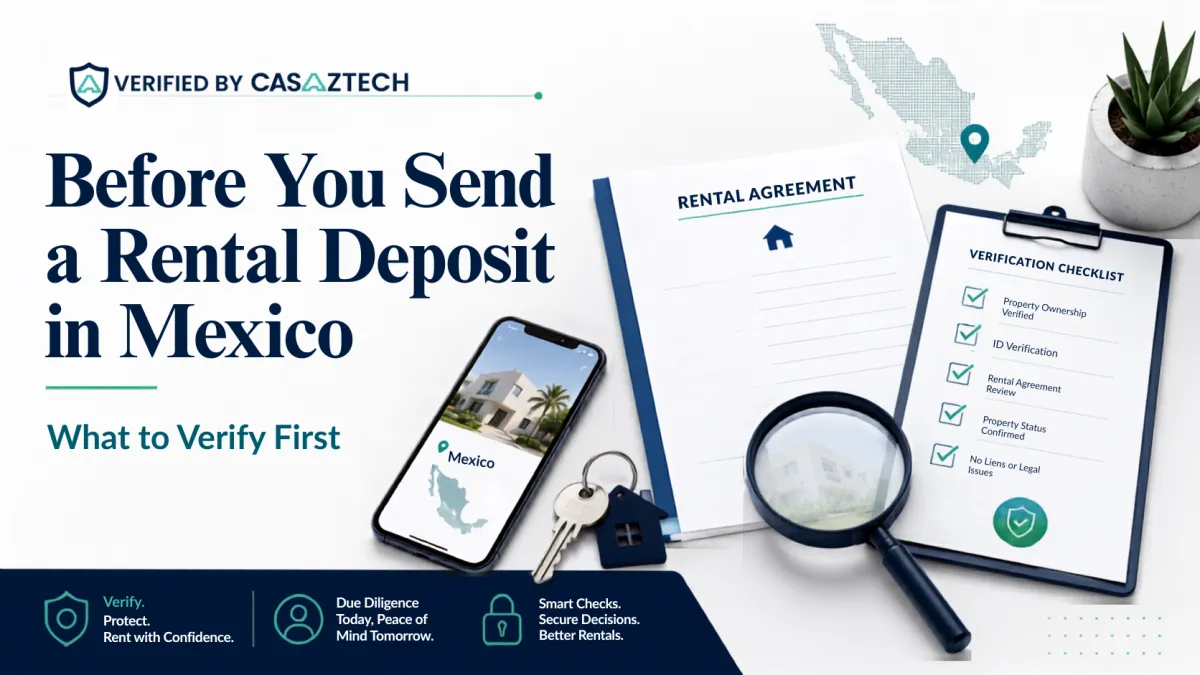
Before You Send a Rental Deposit in Mexico: What to Verify First
Verified by Casaztech Due Diligence Guides
Sending a rental deposit in Mexico is common, especially for long-term rentals, relocations, and extended stays. Many renters are asked to reserve a property before they arrive, sometimes while communicating only through WhatsApp, Facebook, a listing platform, or an agent referral.
That does not automatically mean something is wrong. But before money changes hands, it is worth taking a structured pause.
The key question is not only whether the property exists. The bigger question is whether the person collecting the deposit is who they say they are, whether they have authority to rent the property, and whether the payment request makes sense based on the documents and information available.
Verified by Casaztech helps renters review the owner, agent, documents, payment details, and transaction context before sending money.
Start an Owner/Agent Verification
Important note: This guide is for general education and practical due diligence only. It is not legal advice and does not replace guidance from a qualified attorney or local professional in Mexico.
Why Rental Deposit Due Diligence Matters in Mexico
A rental can look legitimate on the surface and still leave important questions unanswered.
The property may be real. The photos may be real. The person may even be a real owner, agent, or manager. But that does not always mean the payment request, authority, agreement, or rental terms are fully clear.
Before sending a deposit, renters should slow down and review five key areas:
Who they are dealing with
Whether that person has authority to rent the property
Whether the listing details are consistent
How and to whom payment will be made
What the written terms actually say
These are not always easy to confirm from a message thread alone. A structured verification can help identify inconsistencies, red flags, and unanswered questions before the renter is financially committed.
1. Identity: Who Are You Dealing With?
Before sending a deposit, you should have a clear understanding of who is asking for the money.
That includes the person’s name, role, contact information, and connection to the rental. If the person is an owner, their identity should make sense in relation to the property. If the person is an agent or manager, their agency, role, and authorization should be clear.
The goal is not to accuse anyone of wrongdoing. The goal is to avoid sending money based only on a profile photo, a friendly conversation, or a listing that looks professional.
Some basic identity questions include:
Who is the person collecting the deposit?
Are they the owner, agent, property manager, or another representative?
Does their name match the documents, messages, and payment information?
Is there a consistent online or professional presence connected to that person or agency?
Identity alone is not enough, but it is the first layer of review.
2. Authority: Do They Have the Right to Rent the Property?
A person can be real and still not have authority to collect money for a rental.
That is why authority matters.
If someone claims to be the owner, there should be a reasonable connection between that person and the property. If someone claims to be an agent or manager, there should be a reasonable explanation of who they represent and why they are authorized to rent the unit.
This does not mean a renter needs to become a property records expert. But there should be enough documentation and consistency to support the person’s role.
Common authority questions include:
Is this person the owner?
If not, who is the owner?
Is the agent or manager authorized to collect a deposit?
Do the documents, payment details, and agreement all point to the same person or company?
Is there a clear explanation if names do not match?
When authority is unclear, the renter should pause before sending money.
3. Listing Consistency: Does the Property Match the Story?
A real property can still be misrepresented.
Before paying, it helps to compare the listing, photos, location, price, agreement, and messages. The details should fit together.
For example, if the listing describes a specific condo, neighborhood, building, or included service, those details should stay consistent across the conversation and documents. If the price is unusually low compared to similar properties, that does not automatically mean the rental is fake, but it does mean the renter should ask better questions.
Areas to review include:
Property address or location
Unit number or property description
Photos and listing details
Monthly rent and deposit amount
Included utilities or services
Move-in date and rental term
House rules, access details, and restrictions
The purpose is not to find perfection. The purpose is to see whether the information holds together.
Want the Rental Deposit Safety Checklist?
We are building practical Due Diligence Guides for safer rental, hiring, business, and property decisions in Mexico.
Join the guide list to get access to checklists, questions, and verification tips as they become available.
More Due Diligence Guides are coming soon.
We are building practical guides for safer rental, hiring, business, and property decisions in Mexico. This rental deposit guide is the first in the series.
4. Payment Details: How and to Whom Will You Pay?
Payment is where due diligence becomes especially important.
Many rentals in Mexico reasonably require a deposit. The issue is not the deposit itself. The issue is whether the payment request matches the person, property, agreement, and transaction context.
A payment request deserves closer review when:
The account name does not match the owner, agent, or company
Payment instructions change suddenly
The renter is pressured to pay immediately
The person receiving funds is not part of the rental conversation
The payment method is difficult to trace or recover
The amount requested is larger than expected
The deposit terms are unclear or not written down
Sometimes there are legitimate explanations for mismatched names or third-party payment accounts. But those explanations should be clear before money is sent.
If the payment details create confusion, the renter should not ignore that feeling. It may be a sign that more review is needed.
5. Written Terms: What Exactly Are You Agreeing To?
A written agreement is one of the most important parts of the rental process.
It does not need to be overly complicated, but it should clearly explain the main terms of the arrangement. Before sending a deposit, the renter should understand what they are paying, who receives the money, what the deposit covers, and what happens if plans change.
At minimum, the written terms should clarify:
Full names of the parties involved
Property address or unit description
Rental dates
Rent amount
Deposit amount
Payment timing
Refund conditions
Included utilities or services
House rules or restrictions
Responsibilities of the renter and owner
If the agreement is vague, incomplete, or inconsistent with the messages, the renter should ask for clarification before paying.
A professional owner, agent, or property manager should be able to explain the terms clearly.
When to Use an Owner/Agent Verification
Some renters are comfortable asking basic questions on their own. That is a good start.
But when money is about to move, especially from another country or before seeing the property in person, a structured external review can be valuable.
Verified by Casaztech helps renters review the owner or agent, available documents, payment details, references, public information, and transaction context before money changes hands.
The goal is not to guarantee a perfect rental experience. No verification can do that.
The goal is to help identify inconsistencies, red flags, and unanswered questions so the renter can make a more informed decision.
An Owner/Agent Verification may be useful if:
You are being asked to send a deposit before arrival
You are dealing through WhatsApp, Facebook, or a referral
You have not met the owner or agent in person
The payment account does not clearly match the rental documents
The agreement or refund terms are unclear
You feel rushed to pay
Something about the transaction feels incomplete
Before you send money, verify who you are dealing with.
Start an Owner/Agent Verification
Red Flags That Deserve a Closer Look
Not every red flag means a rental is fraudulent. But certain patterns should slow the process down.
Be cautious if:
The person refuses to provide basic identifying information
The person cannot clearly explain their connection to the property
The listing price seems unusually low for the area
The deposit request feels rushed
The payment account does not match the person or company involved
The written agreement is missing or vague
The same property appears in multiple places with different names or prices
The person avoids clear answers about ownership, management, or payment terms
You are told that asking questions is unnecessary or offensive
A legitimate rental process should allow room for reasonable questions.
Before You Send a Deposit, Take a Structured Pause
Before sending a rental deposit in Mexico, pause and review the bigger picture.
Do you know who you are dealing with?
Is their role in the rental clear?
Do the listing details, documents, payment request, and written terms make sense together?
No single check can guarantee a perfect rental experience. But a structured review can help you identify inconsistencies, red flags, and unanswered questions before money changes hands.
Verified by Casaztech helps renters take that structured pause before committing funds.
If you are preparing to send a deposit for a rental in Mexico, verify the owner or agent first.
Start an Owner/Agent Verification
More Due Diligence Guides are coming soon.