
Property Due Diligence in Mexico | Verify Before You Buy
Verified by Casaztech Due Diligence Guides
Buying property in Mexico can be exciting, whether you are looking at a condo in Mexico City, a beach property in the Riviera Maya, a home in Merida, a retirement property in San Miguel de Allende, land in Oaxaca, a pre-construction unit in Los Cabos, or an investment property in Puerto Vallarta.
But no matter where the property is located, the same basic principle applies: before signing, wiring funds, or committing to a purchase, buyers should take a structured pause.
Property due diligence is the process of reviewing the property, seller, documents, payment terms, and transaction context before moving forward. The goal is not to create fear. The goal is to understand what you are buying, who you are buying from, and whether the information you have received makes sense together.
Real estate procedures, local records, municipal rules, HOA requirements, and transaction practices can vary across Mexico. A property purchase in Mexico City may involve different practical considerations than a coastal purchase in Quintana Roo, Baja California Sur, Nayarit, or Oaxaca. A pre-construction purchase may require different questions than a completed resale property. A condo may raise different issues than land, a house, or a mixed-use investment property.
That is why due diligence matters.
Verified by Casaztech helps buyers review property details, seller information, documents, payment requests, and risk indicators before money changes hands.
Start a Verify Before You Buy Review
Important note: This guide is for general education and practical due diligence only. It is not legal advice and does not replace guidance from a qualified attorney, notary, accountant, or licensed professional in Mexico.
What Is Property Due Diligence in Mexico?
Property due diligence in Mexico means reviewing the key legal, financial, practical, and transaction details before buying a property. This may include ownership, seller authority, title history, public registry information, property taxes, HOA obligations, permits, land use, payment terms, and inconsistencies in the transaction. The exact review may vary by state, municipality, property type, and transaction structure, but the purpose is the same: to help the buyer understand the facts before committing funds.
In simple terms, due diligence helps answer one question: does this purchase make sense based on the facts available?
A buyer does not need to become a legal expert. But a buyer should understand what needs to be reviewed and when to slow down before committing funds.
Why Property Due Diligence Matters Across Mexico
Real estate transactions in Mexico can involve different documents, customs, timelines, and local practices than buyers from the United States, Canada, Europe, or other parts of the world may be used to.
The property may be sold directly by an owner, marketed by an agent, offered by a developer, or promoted through a referral. Some purchases involve completed properties. Others involve pre-construction units, assignment rights, private contracts, trusts, corporate structures, or land that may require additional review.
That variety makes due diligence important.
Before buying, a buyer should understand:
Who owns the property
Who is authorized to sell it
Whether the property can be legally transferred
Whether public records and documents are consistent
Whether payments are being made to the correct party
Whether there are debts, liens, HOA issues, or unpaid obligations
Whether the property can be used the way the buyer intends
Whether the written terms match what was promised verbally
These are not always visible from a listing, sales brochure, open house, or WhatsApp conversation.
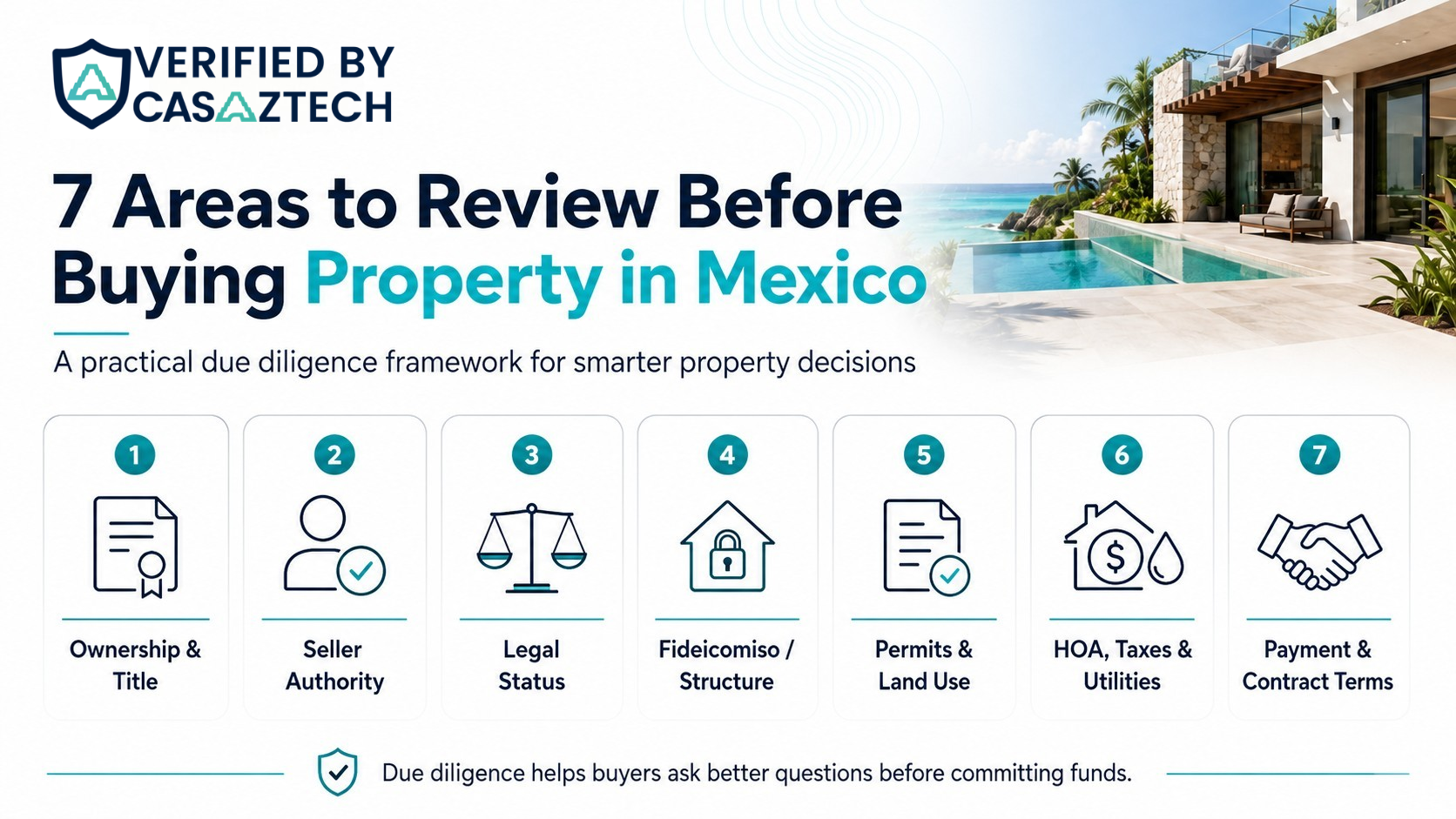
1. Ownership: Who Actually Owns the Property?
The first question is simple: who owns the property?
The answer should be supported by documentation, not only by a message, business card, social media profile, or verbal assurance. The seller’s name should make sense in relation to the property documents, payment request, and contract.
For completed properties, buyers should expect the ownership story to be clear. For pre-construction or developer sales, buyers should understand who owns the land, who is selling the unit, and what exactly is being transferred.
Important ownership questions include:
Who is the current owner?
Does the seller’s name match the documents?
If the seller is a company, who represents the company?
If an agent is involved, who authorized the agent?
Is the property being sold directly, through a developer, through an assignment, or through another structure?
A real property can still create problems if the person selling it does not have clear authority to sell.
2. Seller Authority: Who Has the Right to Sell?
A person can be real, professional, and well-intentioned but still not have authority to complete a sale.
Seller authority matters because buyers are often asked for reservation payments, deposits, down payments, or closing funds before they fully understand who controls the transaction.
If the person communicating with the buyer is not the owner, the buyer should understand that person’s role. Are they an agent? A broker? A developer representative? A property manager? A family member? A legal representative? A shareholder?
When authority is unclear, the buyer should pause.
Seller authority questions include:
Is the seller the legal owner?
If not, who is the legal owner?
Does the representative have written authority?
If a company is selling, who can legally sign for the company?
If a power of attorney is involved, has it been reviewed by the appropriate professional?
Does the person requesting money have authority to receive it?
The issue is not whether a representative can be involved. Representatives are common. The issue is whether the role is clear and documented.
3. Title and Public Records: Does the Legal Story Hold Together?
A property’s legal status should be reviewed before the buyer becomes financially committed.
This does not mean the buyer should personally interpret every legal document. It means the buyer should know that public records, title documents, ownership history, and any encumbrances need to be reviewed by qualified professionals.
The legal story should answer questions like:
Is the property properly registered?
Does the legal description match the property being sold?
Are there liens, mortgages, claims, debts, or restrictions?
Are there unresolved inheritance, corporate, or marital-property issues?
Are the documents current and consistent?
Can the transaction be formalized properly?
If there is confusion between the listing, documents, seller name, property description, or payment instructions, that confusion should be resolved before money moves.
4. Ownership Structure for Foreign Buyers
Foreign buyers in Mexico should understand how the property will be held.
In many coastal and border areas, foreign buyers commonly use a fideicomiso, or bank trust, for residential property. In other locations, direct ownership may be possible. Other structures may also apply depending on the buyer, property type, location, intended use, and transaction structure.
The buyer should not treat ownership structure as a small detail. It affects how the transaction is documented, how rights are held, and what the buyer should expect during closing.
Questions to clarify include:
Is the property in an area where a fideicomiso is required or commonly used?
Will the buyer hold the property directly, through a trust, through a company, or through another arrangement?
Who will coordinate the ownership structure?
What costs, timing, and documents are required?
Are the buyer’s intended uses allowed under the proposed structure?
Verified by Casaztech does not replace the notary, attorney, accountant, or closing professional. But a structured review can help buyers identify what needs to be clarified before they rely on assumptions.
5. Payments, Deposits, and Contract Terms
Payment terms deserve close attention.
A buyer may be asked for a reservation payment, earnest money, down payment, progress payment, or closing balance. The amount, recipient, timing, and refund conditions should be clear in writing.
Payment questions include:
Who receives the money?
Does the payment account match the seller, developer, escrow provider, or authorized party?
What is the payment for?
Is it refundable?
What happens if due diligence raises concerns?
What happens if the seller cannot complete the transaction?
What happens if the buyer cannot proceed?
Are oral promises also written into the agreement?
A payment request may be legitimate, but legitimacy should not be assumed. If the account name, contract party, seller, and property documents do not match, the buyer should ask for a clear explanation before paying.
6. Permits, Land Use, HOA Rules, and Practical Restrictions
Not every property can be used the way a buyer expects.
This is especially important for buyers planning to rent the property, remodel it, operate it as an investment, use it as a vacation rental, build on land, or make changes after purchase.
Practical review areas may include:
Land use and zoning
Construction permits
Completion documents
Condo regime or HOA rules
Rental restrictions
Utility access
Road access
Water, electricity, internet, and maintenance obligations
Environmental or coastal considerations
Outstanding HOA fees or special assessments
A property may look beautiful and still have rules, limitations, or costs that affect the buyer’s plans.
Due diligence should help the buyer understand not only whether the property exists, but whether it works for the purpose they have in mind.
7. Red Flags That Deserve a Closer Look
Not every red flag means a property purchase is unsafe. But certain patterns should slow the process down.
Be cautious if:
The seller cannot clearly prove ownership
The person collecting money is not the seller or authorized representative
The property documents are incomplete or inconsistent
The price is unusually low compared to similar properties
You are pressured to send money before review
The payment account does not match the contract party
The agent, seller, or developer discourages independent review
Important promises are not included in the written agreement
The property has unclear HOA, utility, tax, permit, or land-use status
The transaction timeline feels rushed or confusing
A legitimate seller, agent, developer, or representative should be able to handle reasonable due diligence questions.
Before You Sign or Wire Funds, Verify First
Buying property is not just a lifestyle decision. It is a legal and financial commitment.
Before signing, wiring funds, or committing to a purchase, buyers should understand the property, seller, documents, payments, and risks. A beautiful listing is not enough. A friendly agent is not enough. A professional-looking brochure is not enough.
The transaction should make sense on paper.
Verified by Casaztech helps buyers review the information available before they move forward. We help identify inconsistencies, red flags, and unanswered questions so buyers can ask better questions and make more informed decisions.
Start a Verify Before You Buy Review
When to Use Verify Before You Buy
A Verify Before You Buy review may be useful if:
You are buying from another country
You have not met the seller in person
You are being asked to send a deposit or reservation payment
You are considering pre-construction property
You are buying through an agent, referral, or developer representative
The payment instructions seem unclear
The seller name, company name, or account name does not match
You want a second layer of review before involving additional professionals
You want a plain-language risk summary before moving forward
This service does not replace your attorney, notary, accountant, or closing professional. It complements them by helping organize the information, identify gaps, and prepare better questions earlier in the process.
Final Thoughts: A Better Purchase Starts With Better Questions
The best time to ask questions is before money changes hands.
Property due diligence in Mexico is not about distrust. It is about clarity. It helps buyers understand what they are buying, who they are dealing with, what documents support the transaction, and what risks may need further review.
Before you buy, take a structured pause.
Review the ownership. Review the seller authority. Review the title story. Review the payment terms. Review the practical restrictions. Review the red flags.
Then move forward with better information.